Restored Property Safety
Removes dangerous hanging branches and unstable trees that threaten your family after a storm.
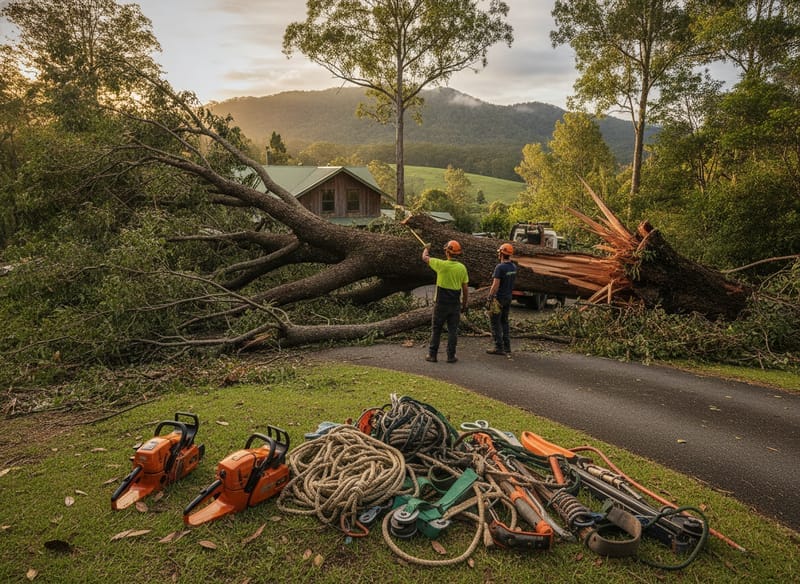
Comprehensive cleanup of storm-battered trees, broken canopies, and fallen debris across Avenell Heights.
Cleaning up storm-damaged trees across Avenell Heights and neighbouring suburbs.
When severe weather strikes, our storm damage tree removal Avenell Heights crew provides systematic cleanup, clearing dangerous debris and restoring safety to residential properties.
During the subtropical summer wet season, east coast lows and thunderstorm cells produce high winds across Avenell Heights when soils are waterlogged. This leads to sudden branch tear-outs in mature poincianas and whole-tree failure in shallow-rooted garden trees.
Removes dangerous hanging branches and unstable trees that threaten your family after a storm.
Cleanly dressing jagged storm tears stops fungal infections and pests from invading surviving trees.
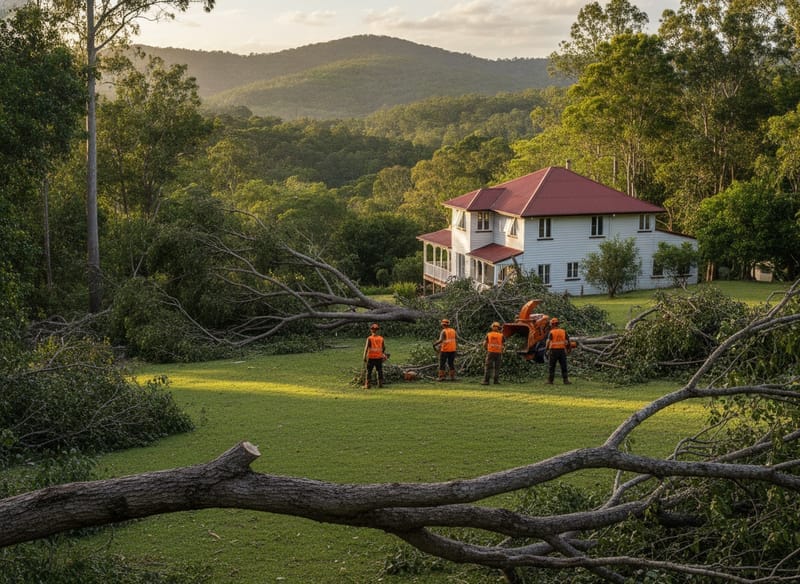
Clears heavy green waste, sticks, and logs, returning your lawn and gardens to pristine condition.
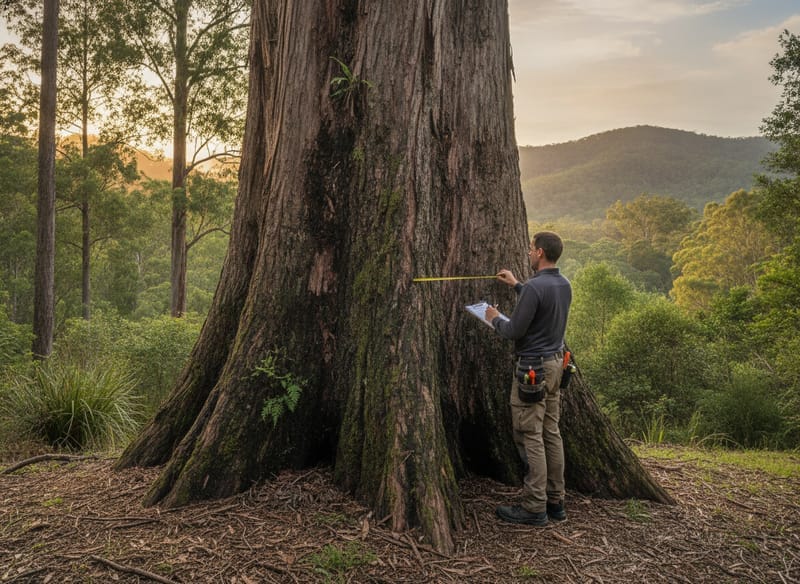
We inspect your property to identify all fallen, cracked, or hung-up tree hazards.
We prioritise high-risk hanging limbs and structures under load before general yard cleanup.
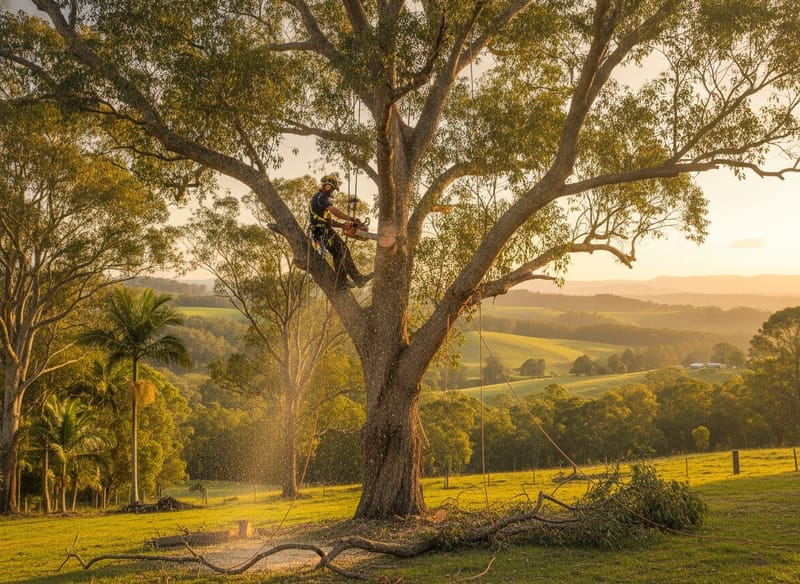
Our team uses specialised rigging to extract damaged branches and dismantle fallen trunks.
All green waste is chipped on-site, logs removed, and surfaces thoroughly raked and blown clean.
When ex-tropical cyclones and severe summer thunderstorms roll through Bundaberg, established suburbs take the brunt of the heavy weather. If you are dealing with fallen branches, uprooted root plates, or hazardous leaning trunks, our team provides rapid, safe, and professional Storm Damage Tree Removal Avenell Heights. Avenell Heights is known for its solid post-war brick homes and large, mature backyard trees. While older Mango, Jacaranda, and Hoop Pine trees provide excellent shade during our hot subtropical summers, their heavy canopies become highly vulnerable to whole-tree failure when high winds hit saturated flood-plain soils. Once the ground is completely soaked, even perfectly healthy trees can unexpectedly give way under extreme wind loading. We are your local arborists, equipped to handle everything from sudden limb drops to complex emergency dismantling. Whether a heavy branch has crashed onto your roof or a massive Moreton Bay Fig has been severely compromised by a storm cell, we bring the right gear and AQF-qualified expertise. Our trucks, chippers, and climbers are ready to deploy, ensuring we can neutralise hazards and make your property safe again quickly and efficiently.
Post-storm tree clearing is vastly different from standard pruning or planned tree removals. When heavy rains saturate the Burnett flood plain and severe winds strike, tree structures fail in unpredictable, highly stressed ways. Attempting DIY clean-up on a hung-up branch or a partially failed trunk is incredibly dangerous. Tension and compression forces can cause the timber to snap back violently or drop without warning when a cut is made.
Many property owners assume a storm-damaged tree must be entirely removed or harshly lopped. However, crude topping or lopping leaves massive stubs that promote weak epicormic regrowth and accelerate decay, creating a worse hazard for the next storm season. Our climbers always assess the damage against AS4373 Pruning of Amenity Trees guidelines. If a tree is structurally devastated or uprooted, we execute a complete, controlled removal. But if the core structure is intact, we can often perform restorative target pruning to save your valuable shade tree.
Relying on under-qualified operators for storm work often results in secondary property damage or rejected insurance claims. We provide detailed photo evidence and itemised assessments before we ever start our top-handle climbing saws, ensuring your insurance process is smooth and your home is fully protected.
We deploy specialised arboriculture equipment to safely dismantle storm-wrecked trees without causing any secondary damage to your Avenell Heights home, fencing, or landscaping.
We sequence our work strictly by risk. Immediate hazards suspended over structures, driveways, or powerlines are neutralised first. Our team uses ropes and rigging to secure hung-up limbs, ensuring they cannot shift or fall while ground crews begin clearing the lower debris.
When fallen trees and storm debris block side access for elevated work platforms (EWPs), our AQF Level 3 climbing arborists use advanced double-rope techniques. We carefully piece down damaged timber over roofs and tight suburban boundaries without relying on heavy machinery access.
For massive root-plate failures or large trees resting heavily on a house, we coordinate loader cranes or HIABs. This allows us to cut the timber and lift the immense weight up and away simultaneously, preventing the structure underneath from collapsing further.
We run high-capacity 9-inch and 12-inch commercial wood chippers to process all shattered leafy canopies into mulch on-site. Heavy logs are loaded into our tipper trucks, and we can deploy our stump grinders to remove any uprooted stumps, leaving the yard flat and safe.
When a severe weather event hits Bundaberg, our response is structured to prioritise safety and ensure seamless communication from your initial call to the final site clean-up. - Step 1: Emergency Assessment and Triage: We walk your property to assess the damage, tagging hazards by priority. A large branch resting on a roof or blocking an access point takes absolute precedence over a fallen tree in the middle of a lawn. - Step 2: Photo Documentation and Quoting: We capture comprehensive photographic evidence of the storm damage before any timber is moved. We provide a detailed, itemised quote that breaks out each tree and task line, which is exactly what your insurance provider needs for prompt claim approval. - Step 3: Make-Safe Work: Our climbers secure the immediate hazards. We use friction devices and rigging ropes to tie off unstable limbs, ensuring they are locked in place while we prepare the drop zone safely below. - Step 4: Full Processing and Debris Removal: Once the primary risks are neutralised, our ground crews bring in the MS500i ground saws, chippers, and tipper trucks. We dismantle the remaining compromised structures, chip the canopy, haul away the heavy timber, and rake the site clean.
Emergency storm response requires strict adherence to safety protocols and industry standards. We are fully public liability insured and carry comprehensive WorkCover for our entire team. You are completely financially protected while we operate chainsaws, chippers, and heavy rigging equipment on your property. All our restorative pruning work strictly complies with AS4373 Pruning of Amenity Trees. We execute precise branch collar cuts designed to minimise internal decay, rather than blindly hacking at damaged limbs. Our crew includes AQF Level 3 climbing arborists and we can provide AQF Level 5 consulting arborist reports when required by insurers or council, giving you the highest level of technical certification available for complex hazard removal.
Providing reliable Storm Damage Tree Removal Avenell Heights means understanding our specific local environment and council regulations. The properties here often feature mature backyard Mango trees, Jacarandas, and tall Hoop Pines. During our wet, subtropical summers, the soils become heavily saturated. When east coast lows or ex-cyclone winds hit, these large trees are incredibly prone to whole-tree root plate failure. Normally, clearing protected vegetation in Bundaberg requires checking the Bundaberg Regional Council Planning Scheme 2015, specifically looking out for the Biodiversity areas overlay. However, following the severe Burnett River flood of March 2026, a disaster clearing exemption is currently active until 9 March 2027. This disaster exemption allows landholders to clear fallen trees and woody debris to prevent property damage or maintain existing infrastructure without formal council approval. Even under this exemption, you must keep a photographic record and a written justification of the hazard. We handle all this vital documentation for you as part of our standard storm response service.
Once the immediate hazards are cleared and the heavy timber is hauled away, your remaining trees will need time to recover. Keep a close eye on the trees that survived the extreme winds. Look for signs of root heave—such as cracked soil lifting at the base—or any sudden leaning, which strongly indicate structural instability. You may also notice epicormic shoots (fuzzy, weak clusters of regrowth) sprouting from torn branches. Do not attempt to prune these yourself, as they are weakly attached. Give our team a call in six to twelve months for a follow-up structural assessment. We can perform formative pruning to restore the tree's natural canopy shape and ensure it remains resilient for the next Bundaberg storm season.
Storm cleanup costs depend on the volume of debris, the size of damaged trees, and equipment requirements.
We provide clear, competitive quotes tailored to your storm cleanup scope.
We provide storm damage cleanup services across Avenell Heights and surrounding areas.
Contact our local team for safe, professional storm cleanup services.
Request a Free Quote