Restored Property Safety
Eliminate hazardous loose branches and unstable trunks before family members or pets enter the yard.
Professional post-storm cleanup, hanging branch removal, and insurance documentation.
Post-storm tree cleanup across Bundaberg North and Burnett River communities
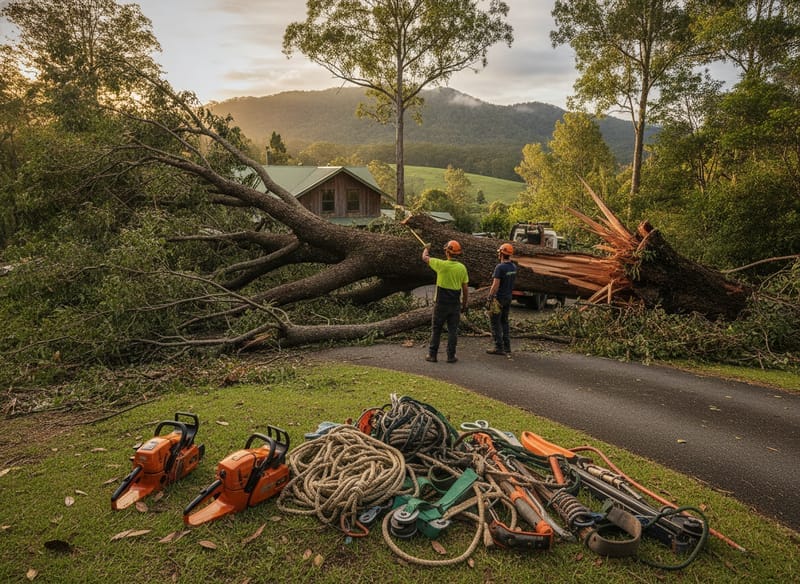
Summer storms, ex-cyclones, and east coast lows frequently batter Bundaberg North, leaving broken branches, shattered canopies, and uprooted trees. Our storm damage tree removal team cleans up the aftermath safely and thoroughly.
Bundaberg North faces high storm impacts due to strong wind corridors along the Burnett River. Heavy rainfall saturates the soil just as severe thunderstorm downdrafts hit, causing limb tear-outs on Poincianas and whole-tree failures on mature river gums.
Eliminate hazardous loose branches and unstable trunks before family members or pets enter the yard.
Receive comprehensive itemised documentation and damage photos that satisfy insurance assessors.
Prune torn stubs cleanly so surviving storm-damaged trees can compartmentalise wounds and recover.
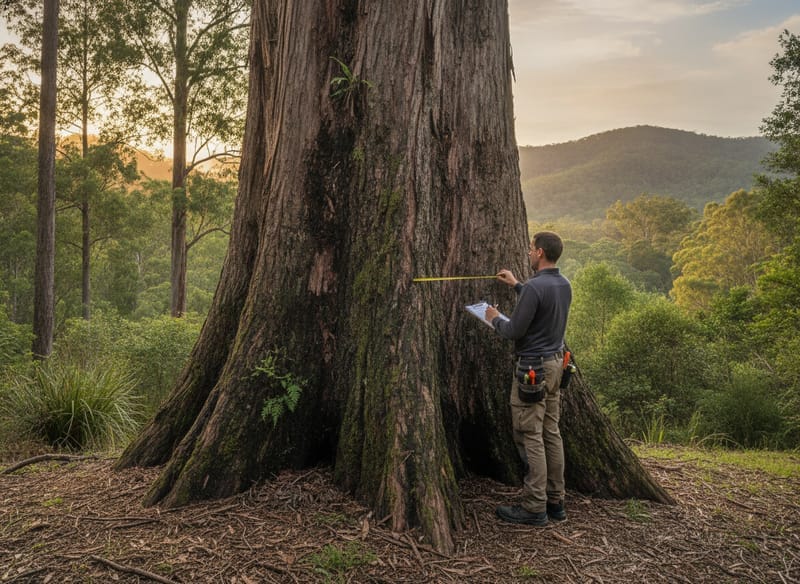
We inspect all trees on site, identifying structural splits, hung-up limbs, and root-plate shifts.
We provide a clear quote, prioritising urgent structural hazards before broad-area debris clearing.
Our arborists use rigging and elevated access to safely dismantle storm-damaged timber.
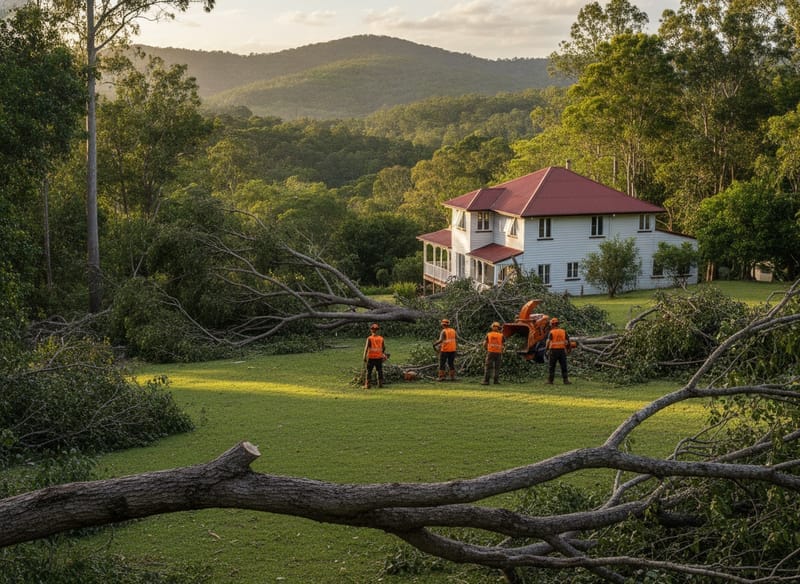
All fallen branches and green waste are chipped and the property is left clean and secure.
When ex-tropical cyclones and severe east coast lows strike the Burnett region, property damage can be devastating. Following the massive Burnett River floods of March 2026 and the lingering memories of ex-Cyclone Oswald, local residents know exactly how destructive our wet summer seasons can be. We are your local experts, providing the Storm Damage Tree Removal Bundaberg North properties rely on when extreme weather leaves a trail of destruction across the region. Saturated soils on the flat Burnett flood plain cause mature backyard Mango trees, Jacarandas, and towering Hoop Pines to suffer massive root-plate failures or drop dangerously heavy limbs. Whether a shattered tree has crashed onto the roof of your heritage Queenslander or completely blocked your narrow side access, our team of fully qualified climbers and ground crew is ready to respond. We deliver safe, rapid, and compliant post-storm hazard clearing to secure your home, restore property access, and prevent costly secondary damage during the peak of storm season.
Tackling shattered timber and hung-up branches with a hired chainsaw is one of the most dangerous things a homeowner can do after a storm. Fallen and partially collapsed trees are essentially giant springs loaded with unpredictable tension, torsion, and compression forces. One wrong cut can cause a massive log to roll, snap back, or drop suddenly, causing severe injury or catastrophic damage to your home, fencing, or vehicles. Furthermore, unqualified operators often resort to 'lopping' or 'topping' surviving trees out of fear. This directly violates AS4373 standards and leaves large, ugly stubs that promote weak, fast-growing epicormic shoots, virtually guaranteeing those branches will fail in the next east coast low. Our team provides a professional, AS4373-compliant approach to post-storm arboriculture. We don't just hack away blindly at the debris; our AQF Level 3 arborists carefully read the structural loads of the fallen timber to dismantle it safely. For trees that survive the storm but suffer canopy damage, we use targeted pruning and correct branch collar cuts to restore structural integrity, ensuring your remaining shade trees remain healthy and resilient against the next bout of wild weather.
When severe summer storms and cyclones hit the Bundaberg region, our team deploys specialised arboriculture techniques to safely dismantle and process failed timber.
We walk the property to tag trees by priority. Immediate hazards over houses, sheds, or powerlines are addressed first, followed by hung-up limbs. We capture detailed photo evidence before any cutting begins to directly support your home insurance claims.
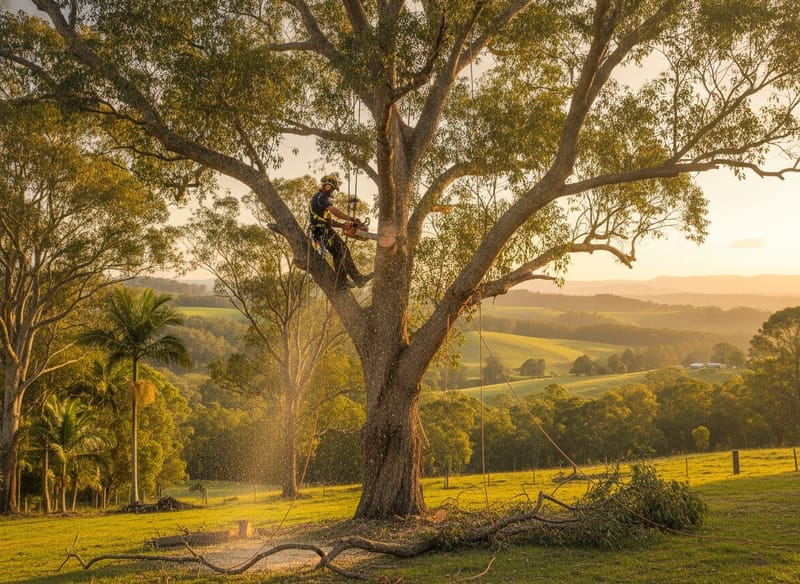
Using advanced rope-access techniques and top-handle climbing saws (like the MS201T), our climbers access compromised canopies to safely relieve tension and remove fractured branches that threaten to fall on pathways or structures below.
For large, uprooted Moreton Bay Figs or Hoop Pines that have failed over tight-access Queenslanders in the older suburbs, we utilise loader cranes to lift heavy timber up and over the house, eliminating the risk of structural impact during the removal process.
We deploy high-capacity 12-inch wood chippers and tracked mini-loaders to quickly process and clear heavy woody debris. Our machinery is carefully selected and operated to manage the soft, saturated post-flood soils of the Bundaberg region with minimal damage to your lawns.
When a severe summer storm or cyclone tail rips through the region, getting your property safe again requires a systematic, professional approach. 1. Emergency Callout and Triage it goes to the top of the list to assess your site. Our first priority is to identify life-safety hazards, secure the immediate work zone, and isolate any trees entangled in overhead powerlines or resting heavily on structural rooflines. 2. Photographic Evidence and Quoting Before we start up a chainsaw, our team takes comprehensive photos of the damaged trees, such as snapped Poincianas or uprooted Forest Red Gums. We provide a detailed, line-by-line quote breaking out each tree, which is essential for processing your insurance claim smoothly and without delays. 3. Safe Dismantling and Lowering Using elevating work platforms (EWPs) where the ground is firm enough, or advanced rope-access climbing on soft, saturated flood soils, our AQF Level 3 arborists safely dismantle the compromised timber. We use controlled rigging systems to lower heavy wood without causing further damage to your property. 4. Complete Site Cleanup Once the hazard is safely on the ground, our ground crews cross-cut the logs, chip the branches, and load everything into our tipper trucks. We leave your property clean, safe, and fully accessible.
Safe tree work requires rigorous standards, especially in highly hazardous post-storm conditions. Our team operates in strict accordance with AS4373 (Pruning of Amenity Trees) to ensure surviving trees aren't compromised, and AS4970 (Protection of Trees on Development Sites) when working near retained vegetation. We are fully insured with Public Liability and comprehensive WorkCover for our entire team. Every climber holds their AQF Level 3 in Arboriculture, Working at Heights tickets, and all necessary chainsaw cross-cut units. When you hire us, you are guaranteed a professional, compliant response backed by proper documentation for your insurer, ensuring complete peace of mind and zero liability for you as the property owner.
Under normal circumstances, tree work in our area is governed by the Bundaberg Regional Council Planning Scheme 2015, particularly if your lot falls under the Biodiversity areas overlay or the Heritage and neighbourhood character overlay.
However, following the major Burnett River flood of March 2026, a state disaster clearing exemption is currently active until 9 March 2027 for the Bundaberg Regional Council area. This specific exemption allows landholders to clear fallen trees and woody debris where necessary to prevent property damage or loss of life, without waiting for council development approvals.
Because this is an exemption and not a blanket free-for-all, our team ensures complete compliance by photographing the hazard before we cut and keeping a written justification of the work. Note that if a council-owned street tree has fallen onto your boundary, interfering with it remains an offence under Local Law 1; we can assist in reporting these directly to Council while we manage the private Storm Damage Tree Removal Bundaberg North jobs on your side of the fence.
Once the immediate storm damage has been removed, it is crucial to monitor the remaining trees on your property. The deeply saturated soils typical of Bundaberg's wet season can easily cause delayed root-plate failure in large species like Mango trees and Hoop Pines. Check the base of your trees over the following weeks for signs of soil cracking, root heave, or a sudden, unexplained lean. Also, watch the upper canopy for rapid dieback or hanging widow-makers we couldn't see during the initial triage. If you notice any structural shifts or signs of decline, contact us to arrange a comprehensive hazard assessment by our AQF Level 5 consulting arborist.
Storm damage tree removal costs in Bundaberg North depend on the scale of storm destruction and tree complexity.
We supply transparent quotes and detailed invoices structured for insurance claim requirements.
We provide storm damage cleanup services across Bundaberg North and neighbouring suburbs.
Clear storm-damaged timber safely with qualified local arborists.
Request Storm Cleanup