Smooth Council Approvals
Eliminate planning delays with fully compliant AS4970 and Bundaberg Regional Council arborist documentation.
Comprehensive AQF Level 5 arborist reports for development applications, risk assessments, and council approvals.
Delivering consulting arborist reports across Elliott Heads, Bargara, and the Bundaberg region.
Our Arborist Report Elliott Heads service provides comprehensive, legally robust documentation for property developers, homeowners, and commercial projects.
Development near the coastline or river mouth in Elliott Heads frequently triggers the Biodiversity areas overlay code or the Sea turtle sensitive area overlay. Our reports outline exact clearing thresholds, species identification, and mitigation pathways.
Eliminate planning delays with fully compliant AS4970 and Bundaberg Regional Council arborist documentation.
Formal written risk assessments demonstrate due diligence for property managers and commercial landholders.
Accurate root zone mapping prevents costly engineering redesigns during construction near retained trees.
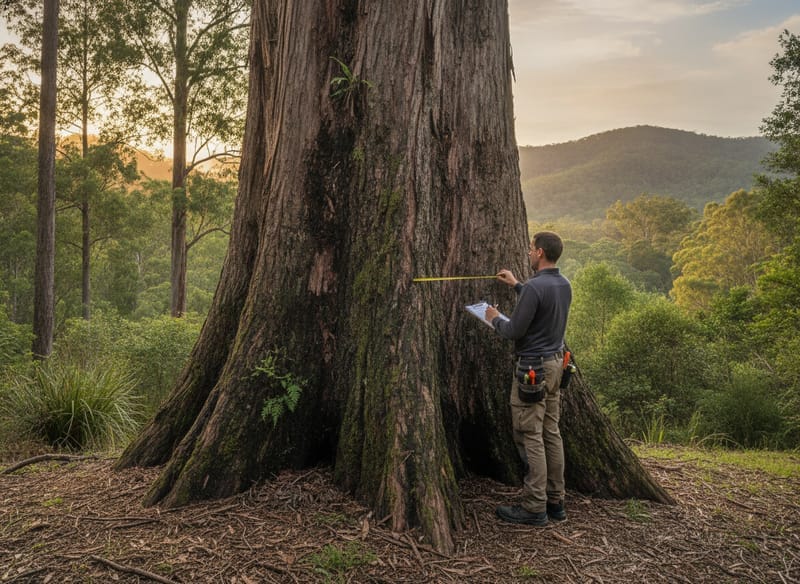
We measure trunk diameter (DBH), height, canopy spread, and inspect for visual signs of decay or defect.
We apply Visual Tree Assessment (VTA) methods and calculate TPZ/SRZ boundaries against your site plans.
Our AQF Level 5 arborist drafts a comprehensive report with findings, risk ratings, and recommendations.
You receive a clear, complete PDF report ready for submission to Bundaberg Regional Council or your insurer.
If you are developing a coastal block, resolving a neighbour dispute, or submitting a Development Application to the Bundaberg Regional Council, you need an expert Arborist Report Elliott Heads. At Bundaberg Arborist, our AQF Level 5 consulting arborists provide the formal, legally recognised documentation required to move your project forward or protect your property.
Elliott Heads is a highly sought-after coastal strip where established trees like She oaks, Cotton Trees, and Norfolk Island Pines meet increasing residential development. Balancing building footprints with protected coastal vegetation requires precise, AS4970-compliant reporting.
Whether you are dealing with salt-burnt, storm-damaged timber after our wet summer season or mapping structural root zones for a new build, our team delivers the factual, authoritative assessments that council planners and certifiers demand. We operate our own trucks and climbers, meaning our consulting advice is backed by real-world tree work experience.
A common mistake we see on the coast is relying on a verbal opinion from an unqualified tree lopper when formal documentation is required. Bundaberg Regional Council and private certifiers do not accept handwritten notes or quotes from AQF Level 3 climbing arborists for Development Applications, risk assessments, or clearing inside the Coastal protection overlay.
If you submit inadequate documentation, your DA will be hit with Requests for Information (RFIs), delaying your build by months and inflating your holding costs. Furthermore, ignoring formal tree protection requirements during construction often leads to compacted structural root zones, causing mature trees to fail years after the build is complete. In coastal areas like Elliott Heads, where cyclonic winds and east coast lows put immense pressure on tree canopies, an undocumented hazard tree is a massive liability for property owners.
The solution is a formal, independent assessment by our AQF Level 5 consulting arborists. We conduct thorough Visual Tree Assessments (VTA) and produce comprehensive reports that comply with both AS4373 and AS4970. Our reports provide the undeniable, scientific justification you need to secure council approval, protect valuable coastal vegetation, and mitigate risk on your property.
We provide a complete range of AQF Level 5 consulting services for residential, commercial, and development sites across the coast.
Comprehensive tree inventories for new builds and subdivisions. We measure DBH (Diameter at Breast Height), assign SULE (Safe Useful Life Expectancy) ratings, and provide retention or removal recommendations tailored to the Bundaberg Regional Council Planning Scheme 2015.
Detailed specifications for protecting retained trees during construction. We map Tree Protection Zones (TPZ) and Structural Root Zones (SRZ), detailing exact requirements for protective fencing, root mapping, and supervised work zones on your Elliott Heads site.
Formal Visual Tree Assessments (VTA) evaluating the likelihood and consequence of tree failure. We identify structural defects, fungal decay, and canopy issues in large coastal species like Hoop Pines and Norfolk Island Pines to document duty-of-care for property owners.
Authoritative documentation required when applying to remove a protected tree within a council overlay. We detail the tree's deteriorating condition, irreversible structural faults, or hazard status, pairing this with suitable replanting recommendations.
Expert witness documentation and causation analysis for storm-damaged timber or neighbour disputes. We provide impartial, scientifically backed evidence detailing why a tree failed or the extent of root damage to adjacent infrastructure.
Securing an accurate, council-ready report is straightforward with our team. We start with an initial consultation over the phone to understand your specific needs, whether that is a DA requirement, a hazard assessment, or an insurance claim following a coastal storm.
Next, our AQF Level 5 consulting arborist conducts a comprehensive site visit at your Elliott Heads property. We perform a Visual Tree Assessment, measuring trunk diameters, mapping canopy spreads, and photographing any structural defects, fungal bodies, or root plate lifting. We also cross-reference the physical site with Bundaberg Regional Council's specific overlays, such as the Biodiversity areas overlay or Coastal protection overlay.
Back at the office, we compile these field metrics into a formal, legally robust PDF document. We calculate your Tree Protection Zones, draft clear site maps, and write definitive recommendations based on the relevant Australian Standards.
Finally, we deliver the completed report directly to you, ready for submission to your town planner, certifier, or local council. If council planners have follow-up questions during the DA process, our consulting arborists remain available to provide technical clarification to ensure your project progresses smoothly.
All our reporting is authored by strictly qualified AQF Level 5 consulting arborists, which is the standard required by local councils and state authorities. We base our methodologies entirely on Australian Standards, primarily AS4970 (Protection of Trees on Development Sites) and AS4373 (Pruning of Amenity Trees).
Our business is fully insured, carrying comprehensive public liability, professional indemnity for our consulting work, and WorkCover for all staff. Whether we are assessing a salt-sheared Pandanus or mapping TPZs for a major beachfront subdivision, our reports hold up under legal, insurance, and council scrutiny, giving you absolute peace of mind.
Writing an effective Arborist Report Elliott Heads requires deep knowledge of the local coastal environment and Bundaberg Regional Council's specific planning instruments. Development here often triggers the Coastal protection overlay or the Sea turtle sensitive area overlay, which protects the nearby Mon Repos rookery.
These overlays strictly regulate vegetation removal to prevent light pollution and coastal erosion, meaning any clearing needs robust AQF Level 5 justification. The coastal climate heavily impacts tree health, and we frequently assess mature She oaks, Cotton Trees, and Norfolk Island Pines that have suffered severe wind shear and salt burn.
Furthermore, following the extreme weather and the Burnett River floods of March 2026, the region is operating under a state disaster clearing exemption until March 2027. While this allows clearing to prevent imminent property damage, property owners still need formal documentation and photographic evidence to prove the hazard was genuine. Our reports provide this critical paper trail for your coastal property.
Once you have your completed report, the next step is implementation. If you are developing your site, you must install all specified Tree Protection Zone fencing and trunk protection before any earthworks or machinery enter the property. Keep a physical copy of the report on-site for certifiers and council inspectors to review.
If the report recommends canopy reduction, deadwooding, or complete removal of a hazardous tree, you will need qualified professionals to execute the work. Our AQF Level 3 climbing arborists are fully equipped to carry out the prescribed AS4373-compliant pruning or precise dismantling. Contact us once your DA is approved, and our trucks and climbers will safely implement the exact recommendations outlined in your report.
Arborist report fees in Elliott Heads reflect the scope of reporting, tree numbers, and whether AS4970 development mapping is required.
We provide fixed-price quotes for all consulting arborist reports following an initial project discussion.
We provide AQF Level 5 consulting arborist reports across Elliott Heads and the wider Bundaberg local government area.
Contact our consulting team for compliant development reports and tree risk assessments.
Get a Free Quote